Diabetes Results That Can Make a Difference
Diabetes runs in my family. Three of my four grandparents had type 2 diabetes, which is where your body doesn’t use insulin properly, and your blood sugar levels get too high. I also have an uncle with type 1, where your body doesn’t make insulin at all.
I knew I had multiple risk factors for type 2 diabetes. I had gestational diabetes when I was pregnant with both my boys. My body mass index is high; I’ve tried to lose weight but haven’t been as successful as I’d like. In my early 40s, I was diagnosed with type 2 diabetes.
I knew a lot about the condition I had developed because at that time, my work was around diabetes control and prevention in North Carolina. In the past few years, my role has expanded to include heart disease. I have served as a staff liaison to the statewide Diabetes Advisory Council, a coalition of diabetes stakeholders, for many years. A couple of years ago, a researcher from the University of North Carolina told the council about a study on finger sticks they were planning. I joined the PCORI-funded study as a stakeholder who had a personal interest in the topic and could talk about the results of the study with our council to share the results statewide.
Avoiding Finger Sticks
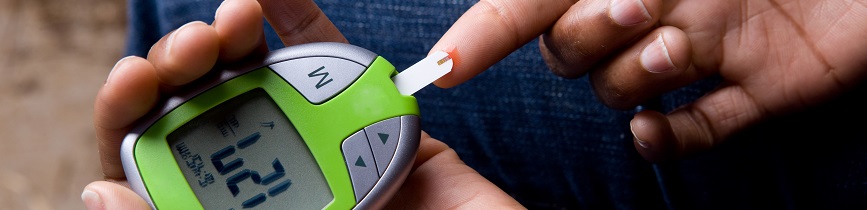
The results are important. Our study found that the finger sticks people like me use to check our blood sugar levels don’t help much if we have type 2 diabetes and aren’t using insulin.
Why is this important? Testing supplies are expensive, and the process is painful—you’re sticking yourself and you’re bleeding! Now we know that people like me can manage just with monitoring our A1C, a measurement your doctor orders that shows your average blood sugar levels for the past three months. For people in the study whose blood sugar seems under control according to their A1C, it appears OK to skip finger sticks.
I remind people that this isn’t the case with people who have type 1 diabetes; for them, it’s never OK to skip your finger sticks, because your body doesn’t make insulin. If you’re on insulin, you need to watch your blood sugar closely.
Spreading the Word
It’s hard to be out there as somebody who is advocating for diabetes control when I have diabetes and my own levels of control go up and down. Diabetes is 24/7. It’s everything you put in your mouth. It’s every exercise you do. It’s a lot.
But that at least means I know where people are coming from. As a public health professional, I want people who have diabetes to check their blood sugar. It was very hard for me to walk that line when I knew I didn’t check as often as I knew I should.
Anything we can do to help people manage their condition within a budget is high on the list of things we in public health want to achieve.
So, it’s a big relief for me and for other people with type 2 diabetes to learn that we don’t have to do the regular finger sticks. Maybe we can shift some of the money we spend on testing supplies to healthier eating or a gym membership. Anything we can do to help people manage their condition within a budget is high on the list of things we in public health want to achieve.
But scientific innovations come out all the time, and it takes people a while to catch up. People rely more than anything else on what their healthcare provider tells them about their conditions. It really is important, if you’re a physician’s assistant, family nurse practitioner, or a doctor, to tell patients, “Hey, you can back off this testing.” We need healthcare providers to really embrace this study and share the results with their patients. We’re going to help do that by presenting the evidence at the diabetes council to share it more broadly.
If patients will come in for A1C checks, they and their healthcare providers can work out a plan where they don’t have to do daily testing and can still manage their diabetes. It can help providers develop a relationship with patients where they are making up a plan together. If enough clinicians do it, it can become a standardized practice.
The views expressed here are those of the author and not necessarily those of PCORI.