How Parents, Patients, and Researchers Help Define the Future of Autism Research
About 3.5 million people in the United States have been diagnosed with autism spectrum disorder. This developmental disorder, with a wide range of symptoms, is characterized by persistent problems in communicating and interacting with others.
Established by the Kennedy Krieger Institute in 2006 to foster communication and trust between the autism community and researchers, the Interactive Autism Network (IAN) aims to improve understanding of the causes of, and discover treatments for, this complicated disorder. In 2015, IAN became one of the Patient Powered Research Networks (PPRNs) that make up PCORnet, the National Patient-Centered Clinical Research Network. PCORnet, which is funded by the Patient-Centered Outcomes Research Institute, is PCORI’s ambitious initiative to harness the power of data and unique partnerships to conduct important health research faster, more efficiently, and at lower cost than is now possible.
In recognition of National Autism Awareness Month, we reflect on our experience with autism research as parents of children with autism.
What led you to become involved in autism research?
Kiely Law: My son, Isaac, was diagnosed at age 3 with autism, and I wondered if he would ever learn to talk and what his life would be like. At the time, I was in my first year of medical school, and I looked to the research literature to see what I could do to help my son. There was very little information. I found that talking to other parents was more informative and useful than talking to specialists.
My husband and I started looking for research opportunities in which Isaac could participate, and it was hard to find studies that matched our needs. We had the idea of starting a network to link the autism community with the research community, and we spoke to families and advocacy organizations. In 2006, Autism Speaks gave Kennedy Krieger Institute the seed funding to build IAN. Now, 250 to 300 people join our network every month, totaling more than 54,000 participants. In the past decade, we have linked the autism spectrum disorder community with more than 500 research studies.
Linda Carter-Ferrier: My experience began 20 years ago when my 3-year-old son was diagnosed with a pervasive developmental delay, and the doctors called it “autism.” I didn’t know what that meant. I went to the library and found one book. I felt like somebody put me in a helicopter, dropped me in the middle of a jungle, and said, go figure it out.
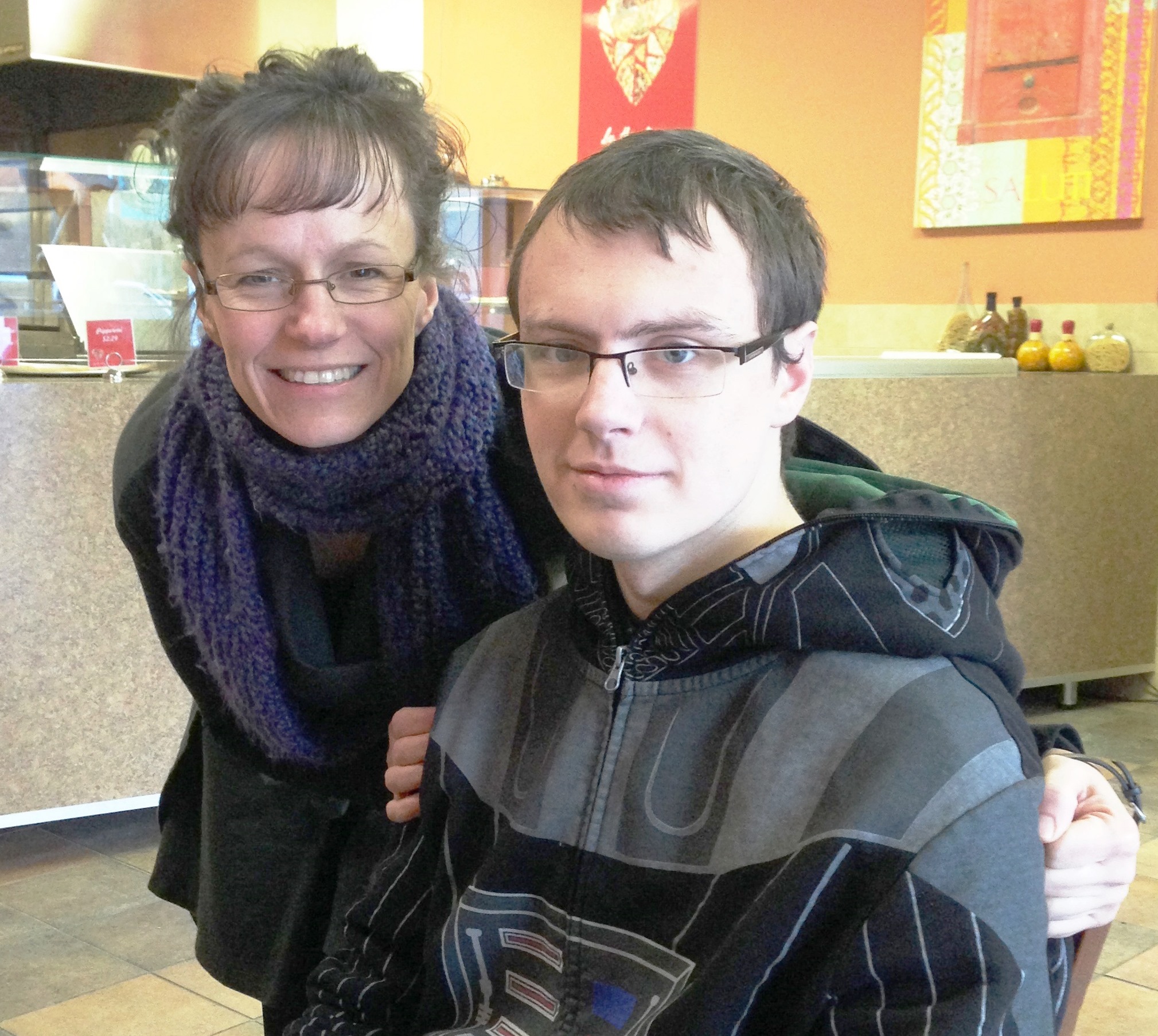
Isaac Law, shown here with his mother, Kiely, was diagnosed with autism at age 3. (Courtesy of Kiely Law)
I did what any parent would do—I looked and I asked. I found a network of parents, became involved in the local chapter of the Autism Society, and eventually became president of that chapter. I knew a bunch of folks from all the autism organizations I was involved in, including Kiely Law and her husband, Paul Law. When they told me about their idea for IAN, I said, “Let me help.” I was a founding member of the parent advisory group for IAN.
How does involvement of patients and families improve autism research?
Kiely Law: Family involvement helps ensure research focuses on the topics that are important to families and individuals with autism. Many participants with autism are now young or independent adults. As kids get older, there is an increased risk of depression, anxiety, and other health problems. These disorders can cause as much distress as autism, and this population needs additional services.
Engaging adults with autism to discover their research interests is important; they have a voice that we need to capture. About 2,000 adults with autism have enrolled in IAN.
We also need families with young children to join IAN. They have unique interests and new experiences that are important to capture and address in research.
Linda Carter-Ferrier: My second son was also diagnosed with autism, and as a parent of children with disabilities, I have spent lots of time being wide awake at 3 a.m. asking questions. By championing research, parents let the researchers know the parents’ questions. For a very long time, my interests (and researchers’ emphasis) focused on early diagnosis and identification. But now that my children are 20 and 23, we’re way past identification and early intervention. My questions now are: How will my sons become the most competent adults they can be? What are the barriers as they move into adulthood? How can we foster them as individuals?
If you sat my sons down and asked them what research they want to see done, they would come up with good ideas that would be different from any researcher’s.
What do you hope to accomplish with your work with PCORnet and IAN?
Kiely Law: PCORnet gives us the opportunity to extend IAN’s reach to more families dealing with autism and to address the problems that occur when children with autism transition to adulthood. Not much is known about what happens to these kids; families describe it as falling off a cliff. The health system doesn’t know how to treat adults with autism, and there are not enough community and therapeutic services for them.
Within PCORnet, the opportunity to collaborate with other communities is also important. Our kids don’t just have autism—they’re all dynamic, growing individuals. There are mood disorders, rare disease, and epilepsy networks that we can partner with.
Linda Carter-Ferrier: The whole PCORnet experience is fascinating. Talking to people in other networks, discovering similarities in needs, and observing the cross-pollination of ideas is fabulous. I spoke to a woman who is involved in a Down’s syndrome organization, and we shared ideas, struggles, and work-arounds. I am excited to be a part of this larger conversation. We’re working to build partnerships and change how research is done.
The views expressed here are those of the author(s) and not necessarily those of PCORI.