Improving the Patient Experience by Working Together
The patient-focused view of health care is expanding, as clinicians and researchers alike recognize the value of engaging patients and their families in decisions about treatments to consider or topics to study. I have been happy to see this happening in both the medical center where I work and my professional organization, the American College of Radiology (ACR). In July, ACR announced the formation of a commission on patient- and family-centered care and asked me to help design it and then serve as chair. One of my first challenges was to find successful models of patient engagement to consider in planning how the commission will operate.
Partners, Not Visitors
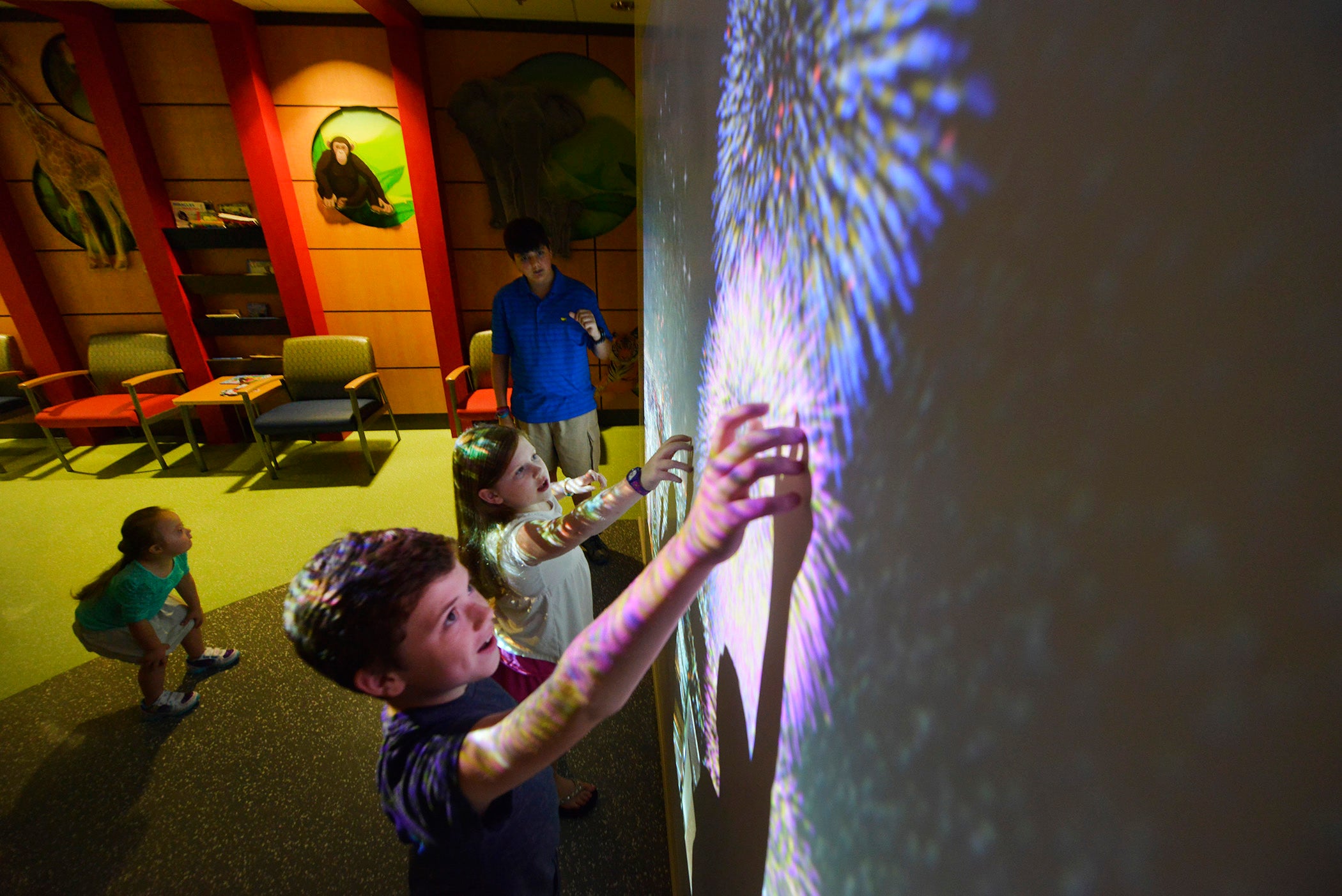
An interactive wall with more than 80 different scenes can be manipulated by young patients to pass the time as they wait in the patient lounge to go back for imaging. This also gives them a measure of control in their experience in pediatric imaging. (Photo courtesy of Augusta University)
In developing the new commission, I was lucky that I could look to my home institute, the Medical College of Georgia. For more than two decades, the university and health system have embraced principles of patient- and family-centered care. In one of the first responses to patient and family input, we eliminated all restrictions on visiting hours at our hospitals; we realized that families are our partners, rather than our guests. Patients serve on several hospital committees, and since 2000, they have contributed to the design of all radiology equipment installed or replaced in our medical facilities.
For ideas about patient engagement, I also looked to PCORI, which holds that the path to patient-centeredness in research is through involving patients and other healthcare stakeholders throughout the research process. I had the honor of participating in some of the institute’s early planning sessions. There, patients and other stakeholders described healthcare needs and the questions most important to them. PCORI leadership listened and asked questions, and then listened some more. Everyone was at the table: patients, caregivers, researchers, methodologists, physicians, nurses, hospital administrators, managers. What emerged was a research road map unlike any other.
Learning from Patients
Working with patients in many capacities has taught me the value of their input. As a medical student, I learned from patients as I took clinical histories and make diagnoses. As a physician, I partnered with patients and their families to use imaging to find the cause of their symptoms. As chair of a radiology department, I have included patients in the design of MRI scanners and mammography suites.
When we planned a cancer center, one cancer survivor brought her granddaughter to meetings to remind us to focus on a cure, so we might spare her granddaughter from experiencing cancer.
In 2010, I had the opportunity to work with patients to review proposals for PCORI-funded research. I found that patients and family caregivers provide a perspective on what is important that is not obvious to researchers. Patients and caregivers can help prioritize research because they can identify outcomes and improvements that they find meaningful and important.
The New Vision
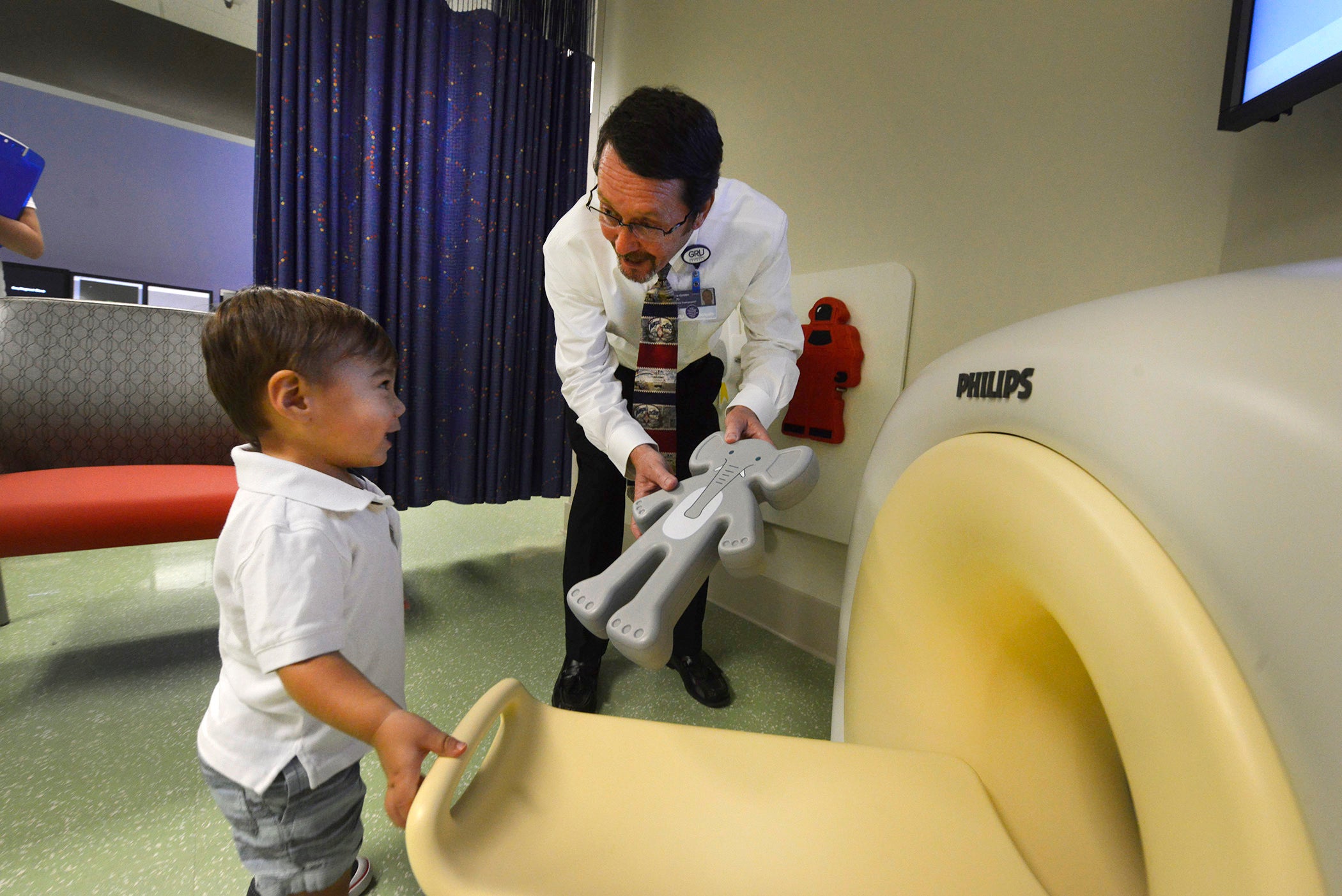
Young patients and parents alike can find peace of mind by playing with a toy on the Philips KittenScanner, a miniature, simulated CT scanner. The small machine helps explain to a child what will happen when he or she goes into the larger CT room for a procedure. (Photo courtesy of Augusta University)
As I planned the ACR Patient- and Family-Centered Care Commission, I took a lesson from the PCORI playbook. In preparation for patient outreach, and to gauge what patient-centered radiology steps may already be effective, I engaged medical professionals, listening to what they were doing and assessing needs and opportunities. I asked questions and listened some more. Those I spoke to had made progress but were often too inwardly focused and not connected with other stakeholders.
A vision emerged: to build the new commission as a safe place where patients could interact in a constructive and effective way with radiology professionals. Patients will be on all the commission’s committees. The new commission will work with existing ACR commissions (e.g., those on economics, informatics, or quality) to increase awareness of the patient and family point of view.
The commission will also reach out to other radiology organizations, as well as other medical organizations, to work collaboratively to improve the patient experience. A wide range of projects is being considered, including improving patients’ experience in radiology, considering new payment systems, and proposing new radiology research.
But would anyone join the new team? Since the announcement of the commission, I have seen an unprecedented groundswell of desire to participate in it. The emails and calls I get from radiology professionals often say “I’ve been waiting for this to happen,” or “This is important to me. It’s where my heart is.” Over 50 volunteers have been recruited from a variety of stakeholder communities.
What can you do with an army of passionate stakeholders about improving patient care? You just might transform the radiology patient experience and, since radiology has such a tremendous impact on health care overall, help medicine take a much needed step forward.