Moving On: From PCORI to the State House
I arrived at PCORI in August 2012, ready to join a growing organization. I was employee number 23 and not quite sure what I’d signed on to. What I knew was that I wanted to help PCORI succeed in achieving its mission of making healthcare research more patient-centered. On day 1, I may not have had a computer or phone line, but my heart was all in. As a family physician, health services researcher, and fanatic about involving the community in research, I was ready to work with patients and stakeholders to create a new body of patient-centered outcomes research that would make a difference in patients’ lives.
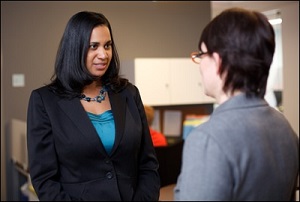
I am now preparing to leave PCORI and head to my home state of Delaware to serve as the nominee for Secretary of Health and Social Services. In this role, I will be charged with keeping Delawareans healthy, ensuring they get the health care they need, and providing children, families, and seniors with the essential services they depend on. It is the largest department in Delaware's government, with an annual budget close to $2 billion and nearly 4,500 employees. I intend to bring PCORI’s focus on patient centeredness and stakeholder engagement to my new duties.
In my early days at PCORI, I helped recruit like-minded, passionate staff members. I also worked with research leaders who wanted to be among the first to receive research funds, and I established PCORI’s early policies and procedures for topic prioritization. I recall fondly our first all-staff retreat, held to establish our strategic plan. We all spoke up and by the end of the day, we had created the framework for our first key strategies for research. Around the same time, we worked out a plan to determine how to set priorities for research.
I have continued to see uninsured patients weekly as a volunteer in a clinic, where I am reminded that patients and clinicians need better evidence to make decisions.
An early assignment from Joe V. Selby, MD, MPH, PCORI’s Executive Director, was to figure out where gaps in evidence existed, so we could select topics for our first set of targeted funding announcements, which came out in June 2013. I had to present the Board of Governors with a plan for making those decisions.
We developed an initial prioritization process and a ranking method, and we evaluated existing evidence on dozens of topics. I remember late-night sessions of working with other staff to read articles, put together topic briefs, and plan for meetings that would include patients, caregivers, clinicians, and other healthcare stakeholders. We did it all: finding articles and writing documents, as well as running the copier, stuffing packets, and making everything look presentable.
That early work formed tight bonds; the staff felt like family. Many of those people continue to step up, do whatever is necessary, and train others in PCORI’s culture of excellence and service.
Over the past four years, I have served PCORI as a Scientist, a Program Officer, and Deputy Chief Science Officer, as well as a member of many cross-functional work groups. I have written policies, procedures, and funding announcement after funding announcement. Most recently, I’ve had opportunities to represent PCORI externally.
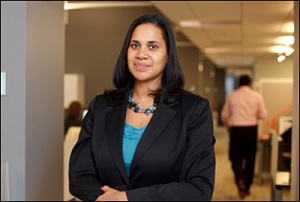
My experiences at PCORI have taught me the tools of professionalism, diplomacy, humility, and commitment needed to change systems and push agendas. I have also learned the importance of teamwork and joint solutions with colleagues, stakeholders, and patients.
I have continued to see uninsured patients weekly as a volunteer in a clinic, where I am reminded that patients and clinicians need better evidence to make decisions. This experience reminds me of the importance of exemplary patient-clinician communication and continuity of care, especially for patients who are struggling to adjust to their new home in the United States. My clinical work has pushed me to become a stronger advocate for all patients, but particularly immigrant, disenfranchised, or underprivileged individuals and families.
Because I have been afforded many excellent opportunities, I believe I have a particular responsibility to use my talents to better the health of the public, particularly those who are less able to advocate for themselves. I feel strong camaraderie with healthcare leaders, past, present, and future, who aim to improve clinical practice to better serve others. Through challenging the current healthcare system, funding patient-centered outcomes research, and committing to communities of need, I anticipate ongoing opportunities to improve people’s health. In my new role, I will continue to seek opportunities to improve patient-centered care, with a focus on better outcomes for all Delawareans.
I joined PCORI with the hope that my work would improve the health of individual patients and underserved populations, as well as influence the health policy of our nation. I am now certain that PCORI has done, and will continue to do, just that. We are starting to see findings from studies we funded that are changing the national dialogue about health research, and there will be even more exciting news and findings to come over the next three to six years.