Three Questions for Lawrence Becker
The research PCORI funds aims to help patients and those who care for them make better-informed decisions about real-world health and healthcare issues they face. Many of those decisions involve patients, their families, and their clinicians. But other stakeholders also must consider various care approaches, such as insurers making coverage decisions, employers choosing among benefits packages, policy makers deciding on potential solutions to problems, and hospital and health-system leaders making decisions about care delivery.
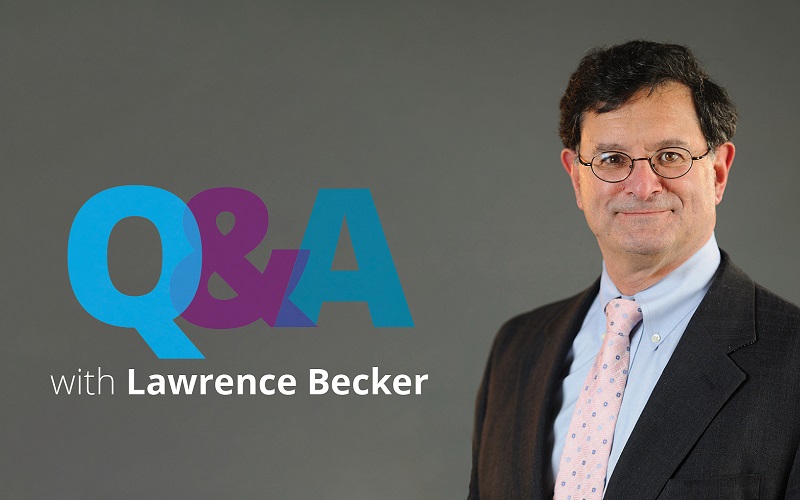
To explore these topics, we are asking representatives of various healthcare stakeholder groups we serve about how the kind of research PCORI supports might help them. Here is what Lawrence Becker, former Director of Benefits and Chair of the Plan Administration Committee for Xerox Corp., and a PCORI Board of Governors member, told us.
How does comparative effectiveness research help employees and employers get the most value for their healthcare investments?
Workers continue to value employment-based health insurance as their most important benefit, according to the Employee Benefit Research Institute. But when premium costs increase, it hurts employers—and we’re seeing them shift those costs to employees.
To maximize the value of employers’ and their workers’ healthcare spending, employer-sponsored health plans should cover the most effective diagnostic, treatment, and prevention services. Comparative effectiveness research is the best way to determine what the most effective therapies are in a given situation, and to identify how to get the most value out of every healthcare dollar.
PCORI has funded many studies on diabetes. How might employers leverage results of these studies to improve employee health?
With diabetes on the rise in the United States, many large employers are working with insurers to launch programs that will help employees reduce their risk of developing diabetes and help those who have the disease manage it.
But organizations employ a wide variety of people. What works for one employee may not work as well for another. For example, programs for a generally healthy 35-year-old African-American woman may not be a good fit for a 55-year-old Hispanic man with a chronic heart condition. The results of PCORI’s research can help employers determine which diabetes management strategies work best for whom. These results will ultimately allow us to design more targeted and more effective plans.
Looking forward, what new or emerging health issues affecting the workplace could benefit most from comparative effectiveness studies?
We need more evidence about preventing and treating mental health conditions, and about how telehealth can best expand access and improve care delivery. We also need more information on how well new drugs compare to one another, older medications, and nonpharmaceutical options.
Many new drugs coming on the market are quite expensive. That puts a lot of pressure on health plans. We just don’t know how well these new medicines work compared with existing or alternative therapies. We need comparative clinical effectiveness research to better understand how these treatments work in the real world and whether they yield better outcomes over time. We want to give our employees evidence-based care, not assumption-based care.
Employers' use of patient-centered research
Lawrence Becker will participate in a webinar along with representatives of Boeing Co. and Walmart on Wednesday, December 6. Speakers will share their perspectives on how employers consider patient-centered research in designing and purchasing employee health benefits. PCORI is partnering with the Integrated Benefits Institute and Center for Workforce Health and Performance to hold this webinar.
The views expressed here are those of the author and not necessarily those of PCORI.