Through the Pipeline to a Research Award
One of PCORI’s aims is to help people who traditionally are not involved in research to create a community that can develop a fundable clinical research proposal on a topic about which they are passionate. Now, our Pipeline to Proposal Awards (P2P) program has reached that milestone: the program has seen one of its awardee teams go on to receive a PCORI research award.
The proposal approved for funding by the PCORI Board of Governors focuses on diabetes among Hispanics/Latinos, who face a 13 percent risk of having the condition, versus an 8 percent risk among non-Hispanic whites. Diabetes can lead to problems in the eyes, kidneys, and feet, which may require amputation. The disease is sometimes fatal, and Hispanics are 1.4 times as likely to die of diabetes as non-Hispanic whites.
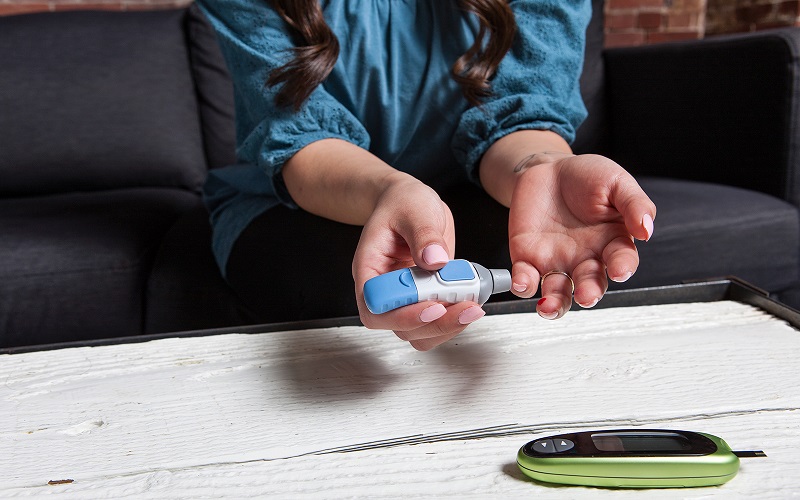
The recently funded project at the University of New Mexico compares two culturally sensitive diabetes self-management programs that aim to help participants reduce their blood sugar levels and make lifestyle changes to support diabetes management .
We spoke with leaders of the research team: principal investigator Janet Page-Reeves, MA, PhD, of the University of New Mexico, and co-principal investigator Lidia Regino, BUS, a community health worker at the University of New Mexico and One Hope Centro de Vida Health Center in Albuquerque, who has prediabetes.
The P2P program really helped us fine-tune our research question and research design.
How did the P2P award help you develop your research idea?
Janet Page-Reeves: When we applied to the P2P program, we had already identified the basic parameters of our research question—we wanted to measure the success of the systematic diabetes self-management program that One Hope uses and compare it with other programs in use in Albuquerque. Community health workers like Lidia run the One Hope program, and they were the driving force behind this idea. However, we had no idea what we would look at in terms of outcomes or measures.
Lidia Regino: The P2P program really helped us fine-tune our research question and research design. It also helped us to create a strong advisory board.
Janet Page-Reeves: The P2P program provided the opportunity to get feedback from people both inside and outside of PCORI. In particular, reviewers of our study design pointed out weaknesses in our research plan, and we addressed those before submitting our proposal. For example, taking their advice, we simplified our study design from three to only two research sites.
Two Approaches to Diabetes Care
Diabetes Self-Management Support Empowerment Model: This program provides group educational sessions to empower patients to take control of their diabetes health, followed by support to sustain self-management gains achieved during the sessions. The approach focuses on changing behaviors related to eating and physical activity, as well as reducing risk, managing stress, and self-monitoring. Its educators must show proficiency in culturally competent supportive care. This program is the American Diabetes Association’s gold standard for diabetes self-management.
Chronic Care Model: This systematic program restructures medical care by creating partnerships between health systems and communities to address the medical, cultural, and linguistic needs of patients. It has six synergistic domains: improved access to care, self-management support, decision support, care coordination, integrated health-information systems, and access to community resources. Published studies have demonstrated that the Chronic Care Model improves treatment of diabetes.
What parts of the process did you find challenging?
Janet Page-Reeves: Our patient advisors identified things that were difficult to measure scientifically. In particular, it was a challenge to account for social dynamics that we know exist and that are important in the lives of Latino diabetes patients.
In the Latino culture, people do not just exist as individuals. Latinos’ everyday lives are embedded in social structures and relationships that have a more defining role in their lives than we see in other groups. If we want to understand diabetes health in Latinos, we have to account for this social dimension.
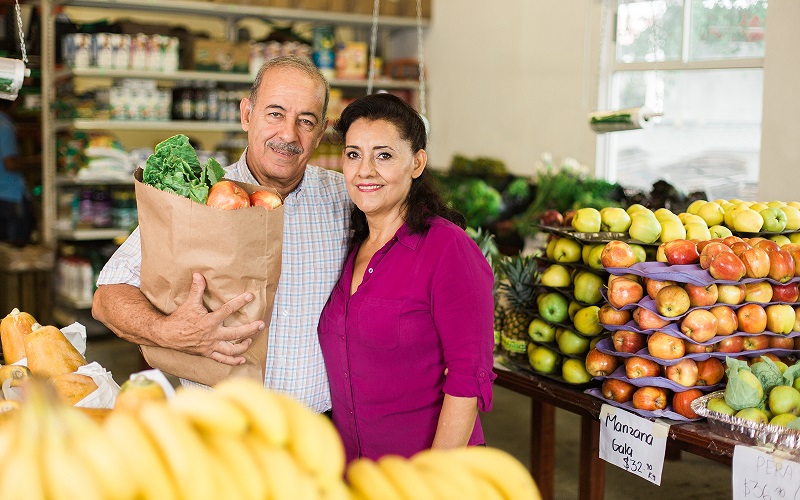
Latino culture relies heavily on social support, and the research team wants to measure how that support affects diabetes management. (Getty)
To accommodate this, we are enrolling patients in pairs with people they identify as a social support. We are surveying the social supports, as well as the patients, about their diabetes knowledge, perspective on the patients’ ability to take care of their diabetes, and the cultural competency of the diabetes self-management program they are enrolled in.
Both patients and social supports will also be interviewed about their relationship. One goal is to assess the impact or influence of social connection on patients’ diabetes management.
Why focus on culturally sensitive programs?
Lidia Regino: As a community health worker at a clinic that mainly serves the Latino population, for years I have seen patients’ need for help with managing their diabetes. I usually get asked the same question: “Does the doctor want me to start eating like a rabbit? I refuse to eat lettuce all day long.”
A problem is the staples of the Latino diet—potatoes, tortillas, and rice—are the very things doctors tell patients not to eat. A lot of patients do not know that those items have high carbohydrate contents and think they are eating healthy because those three items come from the ground.
I usually get asked the same question: ‘Does the doctor want me to start eating like a rabbit? I refuse to eat lettuce all day long.’
Lidia Regino
How do the self-management programs deal with those conflicting values?
Lidia Regino: Being culturally sensitive about what composes a Hispanic diet, while helping patients make adjustments to their food choices and portion sizes, makes the most sense. We present information to patients that is based in community conceptions of diet. Instead of telling people to entirely stop eating these foods, we teach them how to eat a diet that balances different types of food.
You can give patients the power of decision making by teaching them what those foods are doing in their bodies and what portions to eat. Then they can decide to eat those foods, but with the power of knowledge.

Staples of the Latino diet, including potatoes, tortillas, and rice, can be detrimental to diabetes management. (Getty)
How do you plan to test these programs’ effectiveness through your research award?
Janet Page-Reeves: In addition to the surveys assessing patients’ diabetes knowledge, ability to self-manage the condition, and the influence of their social supports, we will be comparing the clinical effects of the two management programs. At the beginning of a participant’s involvement in the study, and 3, 6, and 12 months later, we will also measure A1C—which represents a three-month average of patients’ blood sugar levels—weigh participants, and administer a depression rating assessment.
We truly appreciate the honor of being in the first cohort of the P2P program to receive a research award.
The views expressed here are those of the authors and not necessarily those of PCORI.